Practical
Getting around the Turquoise Coast
The coast around Antalya is easy and cheap to move through — if you know which of the five options to reach for. Here is what the tram, the dolmuş, the otobüs, the taxi and the hire car actually get you, and where a car stops being optional.
Most of what makes this coast worth the trip is spread thin. Good ruins sit up in the hills, the wildest beaches are an hour or two west, and resort towns string out along one highway for two hundred kilometres. None of it is hard to reach — but no single way of getting around covers all of it well, so you end up mixing two or three. The trick is knowing which to grab for which kind of day.
The AntRay tram — Antalya's quiet workhorse
Inside Antalya city, the AntRay tram does almost everything you need. One line runs from the airport, through the centre, out toward the university and Konyaaltı, passing the archaeological museum on the way. Clean, air-conditioned, and running every ten to fifteen minutes from early morning to around midnight.
Pay with an Antalyakart — a rechargeable tap card from a machine at any tram station, the airport, or a kiosk. It costs around ₺50 (a little under €1) with a small credit on it, and a single ride runs about ₺27 (roughly €0.60); tap a contactless bank card instead and you pay nearer ₺33. The card also buys free transfers between tram and city buses inside an hour, which adds up if you are hopping about. One card covers a couple — just tap twice.
Land at Antalya airport with a hotel in or near the city, and the tram is genuinely the move: it stops opposite the terminal, costs small change, and skips the taxi haggle. We walk through the airport options in Antalya Airport and the run down the coast.
The dolmuş — the cheap backbone nobody explains
The dolmuş is a shared minibus that runs a fixed route with no real timetable. It quietly connects beaches, neighbourhoods and the gaps between resort towns, and it is dirt cheap — short local hops cost from ₺15 to ₺50 depending on distance.
The rules are unwritten but simple. Stand by the road, read the destination card in the windscreen, and put your hand out. There are no fixed stops, so you climb on wherever and pay the driver in cash once moving — your money gets passed up the bus, hand to hand, and the change comes back the same way. To get off, call out "inecek var" (someone's getting off). It feels chaotic for four minutes and then it is the most natural thing in the world.
What dolmuş covers well:
- Short runs between resort towns and their beaches — Side to its beach strip, Alanya along the seafront, Kemer up and down the pine coast.
- Getting out to dolmuş-served sights and villages where a full coach would never bother.
- Province-length hops — there are direct minibuses from Antalya to Side, Manavgat, Alanya, Kemer, Kaş and more, often every twenty to thirty minutes in summer.
Carry small notes. Drivers can make change, but handing over a ₺500 note for a ₺30 ride on a packed bus will not win you friends.
Intercity buses for the long runs
For the proper distances you want the otobüs — the intercity coaches that leave from Antalya's otogar (main bus station). Not the minibuses; these are full-size, air-conditioned, often with a steward handing out tea and water, and absurdly comfortable for the money. From the otogar you can reach Side, Alanya, Kaş, Fethiye and on into the rest of the country.
Buy tickets at the company desks in the station, or online if you want a specific departure. Fares stay low — Antalya to Kaş can start around €9, and the shorter hops to Side or Alanya cost a handful of euros. One catch: the otogar sits a tram ride out from the centre, so factor that in. For long, lazy, point-to-point travel where you do not need a car at the other end, this is the smart, cheap choice.
Taxis — fine, if you watch the meter
Taxis are everywhere and metered by law. Just make sure the meter is running before you pull away — a polite "taksimetre, lütfen" does it. Most drivers are straight; a few near tourist ranks will float a flat "good price" that is anything but. For a late arrival, a couple with luggage, or a short hop after the dolmuş has stopped for the night, a metered taxi is reasonable and quick. Over any real distance the bus undercuts it heavily.
The single most useful sentence on this coast is "is the meter on?" — ask it every time, smile while you do, and you will almost never have a taxi problem.
The hire car — when the coast finally needs one
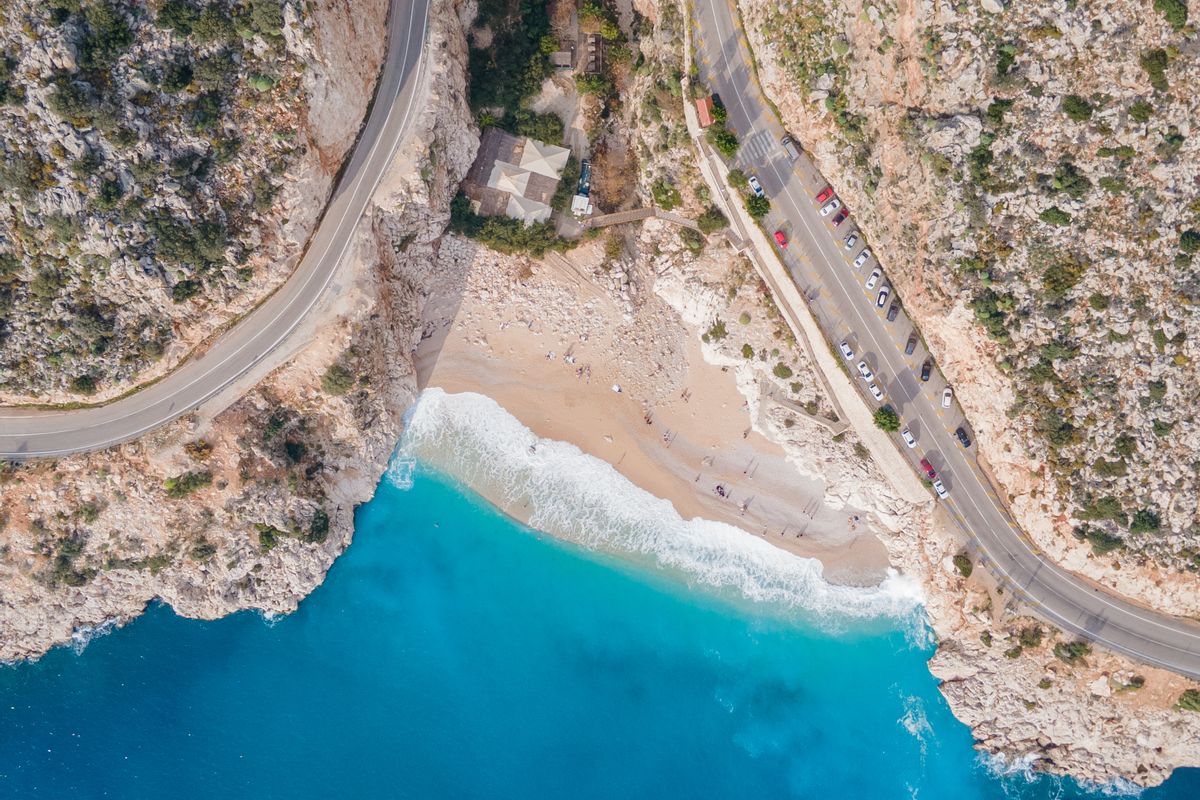
Buses and minibuses cover the towns and the beaches you can name. They do not cover the scattered stuff — and that is half the reason to come. Termessos, the ruined mountain city, sits up a national-park road no coach serves. Aspendos is doable by minibus but fiddly. Western beaches like Kaputaş and Patara reward you for turning up early, before the tour vans. For a day of that, you want your own car.
A small hire car starts around ₺250–300 a day off-season and climbs in summer; book ahead for the good rates. Worth knowing before you sign:
- Bring the paperwork. Usually a credit card in the main driver's name for the deposit, and — if your licence is not in the Latin alphabet — an International Driving Permit alongside it. The desk can get sticky without both.
- Tolls run on HGS. Turkey's motorways and some bridges use an electronic HGS sticker — most rentals come with one fitted, but confirm it, because there are no cash booths to fall back on.
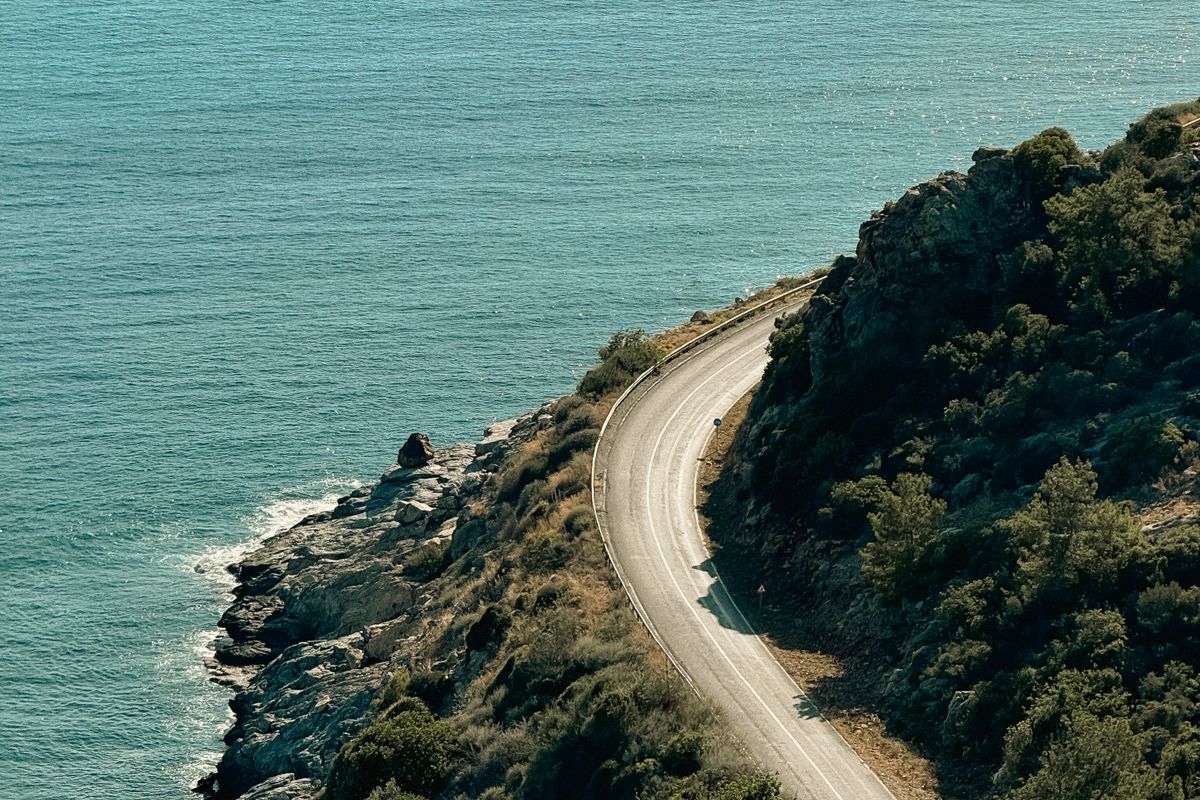
- Coast road easy, mountains not. The D400 along the shore is a straightforward, scenic drive. Turn inland toward the ruins and roads get slow, narrow and switchbacked. Allow far more time than the distance suggests.
- Old towns hate cars. Parking inside Kaleiçi, Side or Alanya's old quarter is a genuine headache. Park on the edge and walk in.
Fuel is not cheap by Turkish standards, so a car only pays off when you actually use its freedom — for the ruins, the wild beaches, a flexible day's wandering. If you are mostly beach-and-town-hopping, skip it and save the parking stress.
Rough drive times to keep in your head, all on the D400 from Antalya:
- Side — about an hour.
- Alanya — about two hours.
- Kaş — three to three-and-a-half hours, and the prettiest of the lot.
One thing to set aside now: there are no passenger trains along this coast. People ask, and the answer is no — the railway never reached the Riviera. Those mountain-train videos are from elsewhere in the country. Here it is road or nothing.
So what should you actually book?
Honest verdict, after all of it: dolmuş and intercity buses handle the budget coast hops perfectly well — cheap, frequent, far less hassle than people expect, and for town-to-town and beach days they are all you need. Rent a car only for the ruins and the wild western beaches, the days where being on no one's schedule is the whole point. Inside Antalya itself, the tram quietly does the rest.
Plan it that way and the coast opens up without you ever feeling stuck. When you start mapping the bigger excursions, our guide to Pamukkale and the big day trips covers which are worth a car of your own and which are better left to a coach and driver.
For current national driving rules and toll details before you take the wheel, check the official GoTürkiye tourism site and the Antalya Airport transport pages, which list tram and bus connections from the terminal.